kabirlifesciences1973@gmail.com
  +91-9216513000, +91-9878891414

Shop
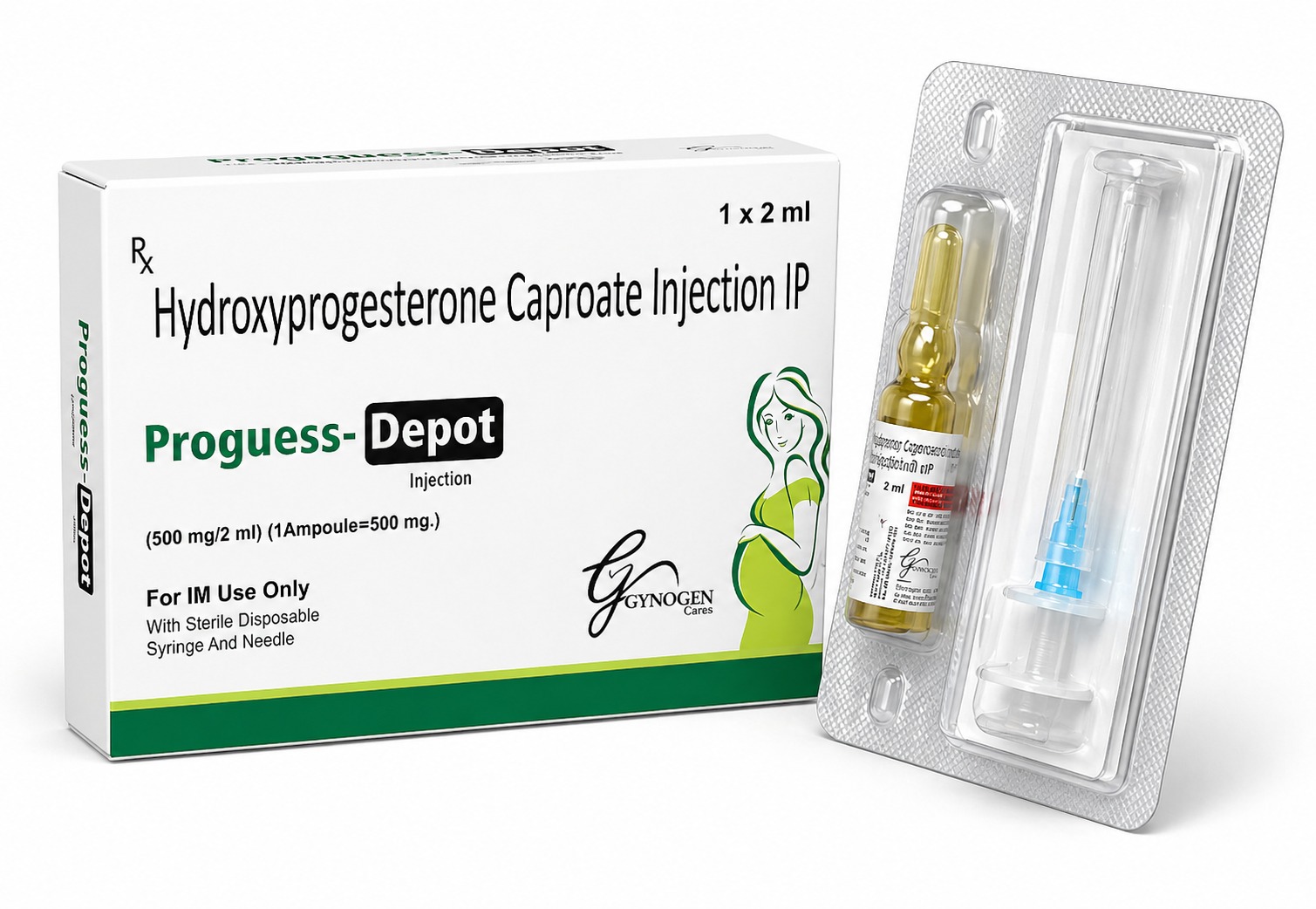
Hydroxyprogesterone Caproate Injection
Proguess-Depot
Hydroxyprogesterone Caproate Injection is available under the brand name Proguess-Depot. It contains Hydroxyprogesterone Caproate, a synthetic form of the female hormone progesterone. Progesterone plays an important role in supporting pregnancy and maintaining hormonal balance in women.
Hydroxyprogesterone Caproate injection is commonly prescribed by doctors in specific pregnancy-related conditions where additional progesterone support may be required. It works by providing progesterone-like activity that helps support the uterine environment and may assist in maintaining pregnancy when recommended by a healthcare professional.
How Hydroxyprogesterone Caproate Injection Works
- Acts on progesterone receptors: Hydroxyprogesterone Caproate works on progesterone receptors and produces an effect similar to the natural hormone progesterone.
- Helps maintain uterine relaxation: It may help in keeping the uterine muscle relaxed and reduce contractions in the uterus.
- Supports the uterine environment: It works like the natural hormone Progesterone that helps in keeping the uterus suitable for pregnancy and supports the uterine lining.
- Provides prolonged action: The caproate form is released slowly into the body after the injection, so the medicine stays active for a longer time and provides a lasting effect
Uses of Hydroxyprogesterone Caproate Injection
Hydroxyprogesterone Caproate Injection may be prescribed for:
- Hormonal support during pregnancy
- Reducing the risk of preterm birth in selected pregnant women with a history of spontaneous preterm delivery
- Progesterone deficiency conditions
- Certain pregnancy-related hormonal disorders
- Other gynecological conditions as advised by the doctor
The medicine should only be used for the condition and duration prescribed by a healthcare professional.
Direction of Use
- Hydroxyprogesterone Caproate Injection should be administered only by a doctor or trained healthcare professional.
- Do not take the injection unless it is advised by your doctor
- Follow the correct dosage prescribed by your doctor.
- The dose and duration depend on the conditions of the patient.
- Do not stop treatment without consulting your doctor.
Precautions for Hydroxyprogesterone Caproate Injection
- Pregnant women should use this injection only under medical supervision.
- Always inform your doctor if you are suffering from liver disease, high blood pressure, asthma, diabetes and kidney problems.
- Tell your doctor about all the medicines and supplements you are taking.
- Inform your doctor if you have a history of blood clotting disorders or allergies.
- Regular medical check-ups may be required during treatment.
- Do not use the injection without a doctor’s prescription.
Storage
- Store below 25–30°C or as directed on the product label.
- Protect from direct sunlight and moisture.
- Keep out of the reach of children.
- Do not freeze the injection.
- Do not use after the expiry date.
- Dispose of unused medicine according to a pharmacist’s advice.
Possible Side Effects of Hydroxyprogesterone Caproate Injection
Like all medicines, this injection also causes some side effects.
- Pain or swelling at the injection site
- Nausea
- Headache
- Dizziness
- Fatigue
- Breast tenderness
- Mild allergic reactions
If any side effects become severe or persist for a longer duration, consult your doctor immediately.
Frequently Asked Questions (FAQs)
What is Hydroxyprogesterone Caproate Injection used for?
It is a progestin injection used for certain hormone-related conditions.
Can it be used during pregnancy?
Pregnancy-related use depends on the specific product and medical indication. Use only as advised by a doctor.
Can Hydroxyprogesterone Caproate Injection affect the menstrual cycle?
Yes, progestin therapy can cause changes in menstrual bleeding or periods in some patients.
What is the dose of Hydroxyprogesterone Caproate Injection?
The dose and treatment duration depend on the patient’s condition and should be decided by the doctor.
Who should avoid Hydroxyprogesterone Caproate Injection?
People who are suffering from problems like blood clotting problems, liver disease, hormone-sensitive cancers, or vaginal bleeding may need to avoid it.